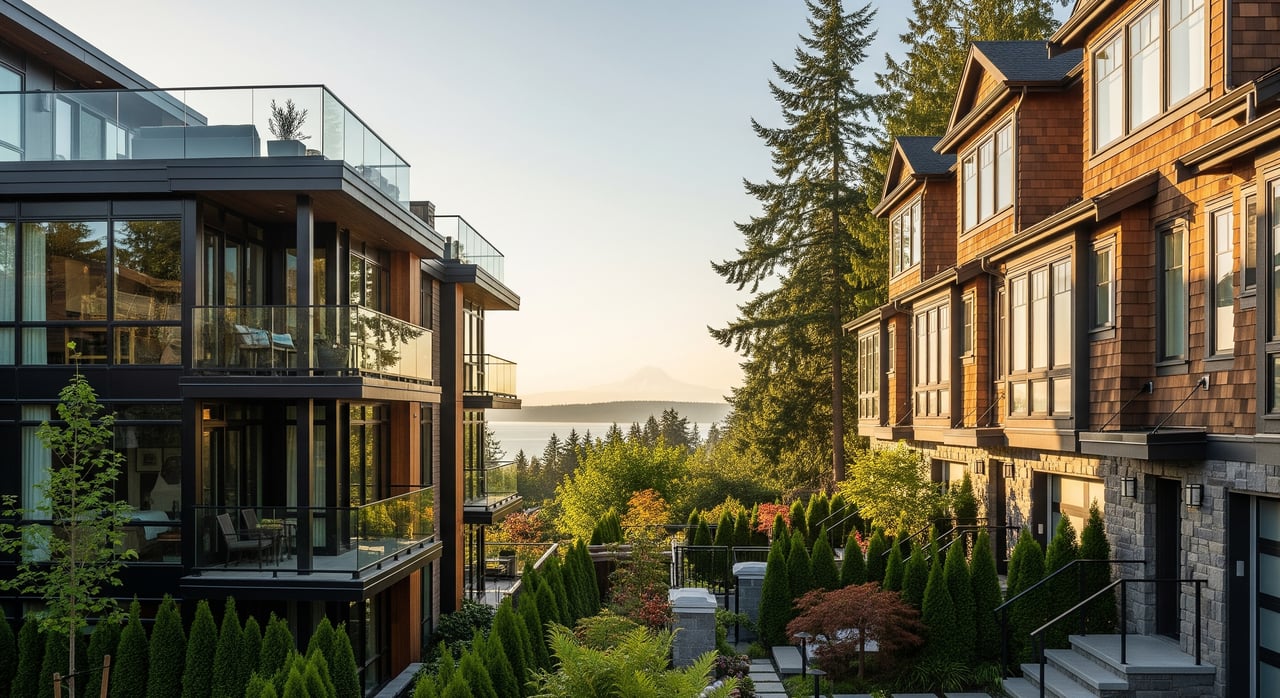
Trying to balance monthly costs, space, and long-term peace of mind as you compare a Shoreline condo with a townhome? You are not alone. Many buyers weigh HOA dues against maintenance responsibilities and wonder how financing and resale will play out down the road. In this guide, you will learn the key ownership differences, what fees usually cover, how insurance and lending work, and the tradeoffs you can expect across Shoreline. Let’s dive in.
Condo vs. townhome basics in Shoreline
In Shoreline, “condo” and “townhome” describe both a style of living and a legal structure. That structure drives costs and responsibilities, so it is important to understand what you are buying.
- Condominiums: You own the interior of your unit plus a share of the common elements such as the roof, exterior, hallways, and land. A condominium association governs the property with recorded documents and rules.
- Townhomes: These are attached, multi-level homes with private entrances. In Shoreline, a townhome can be legally organized as a condo project or as fee-simple lots within a plat. The label “townhome” does not guarantee ownership type. Always verify the recorded declaration, CC&Rs, and plat.
How ownership affects responsibilities
- Condos: Owners typically maintain only the interior of the unit. The association handles the exterior shell, roof, common systems, and common-area liability.
- Townhomes: If the townhome is fee-simple, you may be responsible for the roof, exterior paint, and any yard. If the townhome is structured as a condo, the association may cover more. Read the documents to be sure.
HOA dues, reserves, and assessments
Monthly dues vary by building type, age, services, and amenities. Understanding what drives those fees will help you compare options fairly.
- Building-scale services: Elevators, hallways, lobbies, and common HVAC systems usually raise condo dues.
- Site services: Landscaping, snow removal, and parking maintenance affect both condos and townhomes.
- Utilities: Some associations include water, sewer, or garbage, while others bill separately.
- Insurance and reserves: Master insurance and contributions to reserves are major budget items.
- Amenities: Fitness rooms, secured entry, guest parking, and community spaces increase dues.
As a general rule, multi-story condo buildings tend to have higher monthly HOA fees than townhome communities where owners handle more exterior items. Townhome dues can be lower, but they vary widely based on what the HOA covers.
Watch the reserve study
A well-funded reserve account signals stability. Older buildings or those with deferred maintenance are more likely to levy special assessments for items like roofs, siding, piping, or elevator upgrades. Review the reserve study, current budget, minutes, and any recent or pending assessments before you buy.
Maintenance and long-term costs
Your true cost of ownership depends on how maintenance responsibilities are divided.
- Condos: You pay a steadier monthly fee that helps cover capital projects like roof replacement and exterior work. You are usually responsible for interior repairs.
- Townhomes: If fee-simple, you may have lower dues but should budget for larger, less frequent expenses such as roof or siding replacement, exterior paint, fences, and driveways. Townhomes with condo structures may include more exterior coverage in dues.
If you prefer predictable monthly costs and less hands-on maintenance, a condo can be a good fit. If you want more control and are comfortable planning for occasional big-ticket projects, a townhome may suit you.
Insurance basics for each
Insurance is another place where structure matters.
- Master policy: Associations carry a master policy for common areas. Determine whether it is an all-in policy that covers some interior components or a bare-walls policy that stops at the drywall.
- Unit policies: Many condo owners need an HO-6 policy to cover interior finishes, personal property, liability, and loss assessment exposure. Townhome owners who own the exterior may need an HO-3 policy similar to a typical single-family home policy.
- Deductibles: Understand how the association allocates deductibles. Some pass deductibles or portions of large claims to owners.
Confirm coverage requirements and loss assessment terms before you finalize your budget.
Financing and resale outlook
Lenders treat condos and fee-simple townhomes differently, which can affect both your mortgage process and eventual resale.
- Financing: Fee-simple townhomes are often treated like single-family homes, which can be easier for financing. Condos must meet project eligibility standards from Fannie Mae, Freddie Mac, and government-backed programs such as FHA or VA. Items like owner-occupancy rates, reserves, litigation, and insurance can affect approval.
- Marketability: Townhomes often attract buyers seeking a house-like feel with a garage or small yard. Condos appeal to buyers who value lower personal maintenance and on-site amenities. Condos can face a narrower buyer pool due to HOA rules, higher monthly dues, and financing screens.
- Location factors: In Shoreline, proximity to transit, commuter routes, and neighborhood amenities is an important driver of value for both property types.
Resale risk factors to review
- Owner-occupancy and investor concentration
- Pending or recent litigation
- Reserve funding and planned capital projects
- Rental and pet rules
- Parking allocations and guest parking
- Any active or proposed special assessments
Shoreline layouts and amenities
Shoreline’s mix of transit corridors and neighborhood nodes supports a range of condo and townhome options.
- Condos: You will see low-rise garden condos near commercial corridors and mid-rise buildings in denser areas. Typical amenities include secured entry, fitness rooms, shared laundry, and assigned or garage parking. Mid-rise buildings with elevators and underground parking often carry higher dues.
- Townhomes: Expect 2 to 3 stories with a private entrance, small patio or yard, and a one or two-car garage. Rowhouse-style homes along major routes can be more compact with limited outdoor space. HOA coverage ranges from minimal common-area care to broader exterior coverage if the townhomes are organized as condos.
Proximity to I-5 and SR 99 supports strong demand from commuters. Buyers often trade a bit of space for easier access to transit and services.
Budget-minded scenarios to consider
Use these examples to match property type with your priorities.
- Keep monthly costs predictable: A smaller condo in a well-managed association can be efficient. Your HOA dues may be higher, but they usually cover exterior upkeep, reserve contributions, and some shared utilities or amenities.
- Minimize dues, accept occasional big projects: A fee-simple townhome often has lower monthly dues, but you should plan for long-term items such as roof and siding replacement.
- Maximize space and privacy on a budget: A townhome can deliver more bedrooms, a garage, and some outdoor space compared with a similarly priced condo. Expect more personal maintenance.
- Reduce physical upkeep and stairs: A condo with elevator access can simplify daily living. This is a common priority for downsizers and anyone who wants low maintenance and convenient building amenities.
Due diligence checklist
Before you write an offer, review the documents and conditions that directly impact your costs and lifestyle.
- Ownership structure: Confirm whether a townhome is fee-simple or organized as a condo. Read the declaration, CC&Rs, and plat.
- HOA financials: Review the current budget, reserve study, dues history, meeting minutes, and any special assessments.
- Insurance: Understand the master policy type, deductibles, and whether you need an HO-6 or HO-3 policy. Check loss assessment coverage.
- Lender eligibility: Ask your lender about project warrantability, owner-occupancy ratios, and insurance requirements.
- Maintenance map: Clarify who maintains and pays for the roof, exterior paint, siding, fencing, windows, decks, and driveways.
- Parking and storage: Confirm assigned spaces, guest parking rules, and any street permit requirements.
- Pet and rental policies: Note any restrictions that might affect your plans.
- Local context: Consider commute routes, transit access, and neighborhood services. Review school boundaries if relevant to your needs.
How to choose with confidence
Start by listing your must-haves, nice-to-haves, and budget guardrails. Decide whether you prefer predictable monthly costs with less personal maintenance or lower dues with more hands-on responsibility. Compare two or three communities side by side by looking at dues, reserve strength, coverage maps, and insurance requirements. Then weigh location and layout against your daily routine and long-term plans.
If you want a house-like feel with a garage and some outdoor space, a townhome may be right for you. If you want low-maintenance living with amenities and predictable budgeting, a condo might fit better. The best choice is the one that aligns your monthly costs, time commitments, and future goals.
When you are ready to explore specific Shoreline buildings or townhome communities, reach out to a local team that knows the documents, the financing steps, and the neighborhood tradeoffs. The right partner can help you compare options clearly and move forward with confidence.
Ready to take the next step? Connect with the advisors at Haines Huff Properties for local guidance and a personalized condo or townhome game plan in Shoreline.
FAQs
Are townhomes always cheaper than condos in Shoreline?
- Not always. Prices vary by size, location, ownership structure, age, and amenities. Townhomes may offer more space per dollar but can carry more maintenance.
Which has lower long-term costs: condo or townhome?
- It depends. Condos spread exterior costs through HOA dues, while townhomes may have lower dues but require owners to fund larger, occasional repairs.
Which is easier to finance in Shoreline?
- Fee-simple townhomes are typically easier since lenders treat them like single-family homes. Condos must meet project eligibility standards that can limit loan options.
What HOA documents matter most for risk and resale?
- Review the reserve study, budget, minutes, insurance details, owner-occupancy levels, rental and pet rules, litigation status, and any special assessments.
How do amenities affect monthly HOA dues?
- Elevators, secured entries, fitness rooms, and structured parking increase operating costs and reserves, which usually results in higher dues.
What should relocating buyers consider about Shoreline locations?
- Weigh commute routes like I-5 and SR 99, access to transit and services, and how those factors support resale and daily convenience.